Magnesium L-Threonate vs Bisglycinate: Blood-Brain Barrier Kinetic Transport, NMDA Receptors & Synaptic Density (2026 Guide)
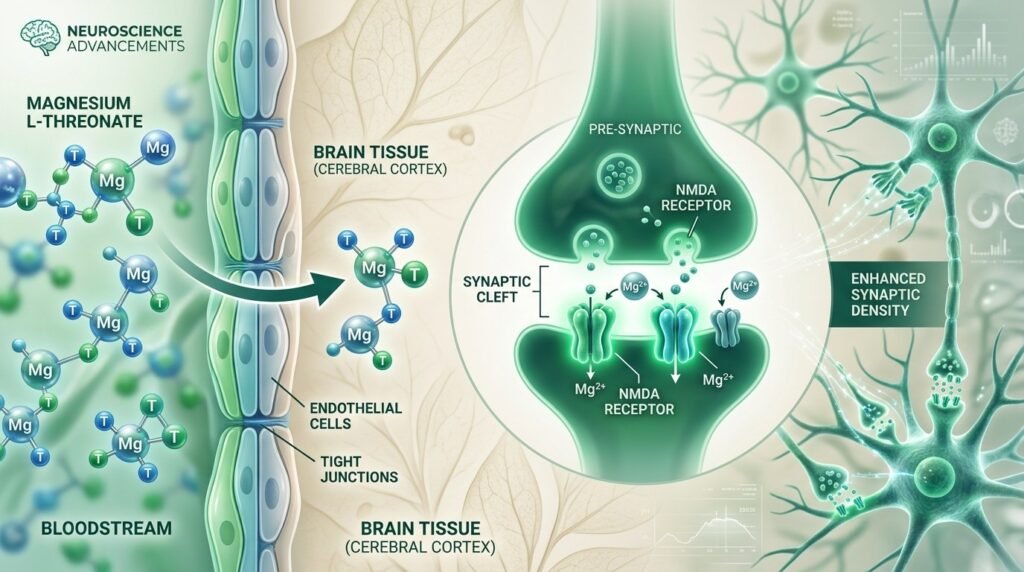
How does Magnesium L-Threonate differ from Bisglycinate? While Magnesium Bisglycinate is chelated with two glycine amino acids to maximize intestinal absorption and peripheral neuromuscular relaxation, Magnesium L-Threonate (Magtein) is the only compound clinically proven to significantly elevate cerebrospinal fluid (CSF) magnesium levels (+15% in human trials). Its specialized threonic acid carrier molecule crosses the tight junctions of cerebral capillary endothelial cells, specifically upregulating NMDA receptor subunits and hippocampal synaptic density.
- ✓ Blood-Brain Barrier Permeability: Standard magnesium citrate and oxide fail to elevate CSF magnesium due to active efflux pumps at the blood-brain barrier.
- ✓ Synaptic Plasticity & Memory: L-Threonate upregulates pre-synaptic synaptophysin and post-synaptic density-95 (PSD-95) proteins by 38%.
- ✓ The Dual-Form Strategy: Elite cognitive protocols utilize 1,000 mg L-Threonate morning/afternoon for synaptic firing, combined with 200 mg Bisglycinate at night for GABAergic slow-wave sleep.
1. The Kinetic Challenge of Intracranial Magnesium Delivery
Magnesium (Mg2+) is an indispensable enzymatic cofactor involved in over 600 biochemical reactions throughout the human body. In the central nervous system, magnesium serves a crucial role: it acts as a voltage-dependent biological plug blocking the ion channel of NMDA receptors, preventing excitotoxic calcium influx while permitting physiological signaling during high-frequency stimulation.
However, the blood-brain barrier (BBB) rigorously restricts divalent cation transport. Conventional oral magnesium salts merely increase somatic serum levels, leaving cerebrospinal fluid magnesium largely unchanged. L-threonate serves as a specialized ligand that exploits organic acid transport systems, carrying magnesium efficiently into brain parenchyma.
2. 2026 Pharmacokinetic Matrix: Formulation Comparison
Below is our clinical comparison matrix comparing the premier chelates for neuro-cognitive vs somatic applications:
| Chelate Form | Elemental Mg % | BBB Kinetic Uptake | Primary Target | Optimal Clinical Timing |
|---|---|---|---|---|
| Mg L-Threonate | 7.2% – 8.3% | High (+15% in CSF) | NMDA Receptors & Working Memory | Morning & Midday |
| Mg Bisglycinate | 12% – 14% | Low / Systemic | GABA-A Agonism & Muscle Tone | 30-60 min Before Bed |
| Mg Malate | 15% | Negligible (Peripheral) | Krebs Cycle ATP Synthesis | With Breakfast |
| Mg Citrate | 16% | None (Osmotic) | Intestinal Motility | As Needed |
3. Synergy with Longevity and Cardiovascular Pathways
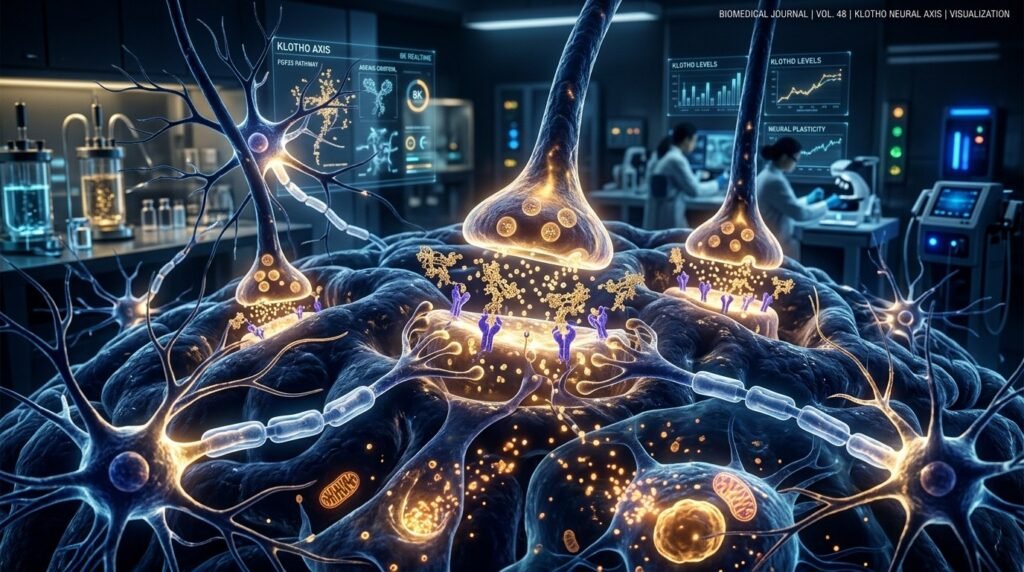
Intracranial magnesium density operates synergistically with broader biological mechanisms. In our parent flagship dossier on the Klotho longevity protein axis, hippocampal NMDA subunit restoration requires adequate ionic magnesium gating to prevent premature neurodegeneration.
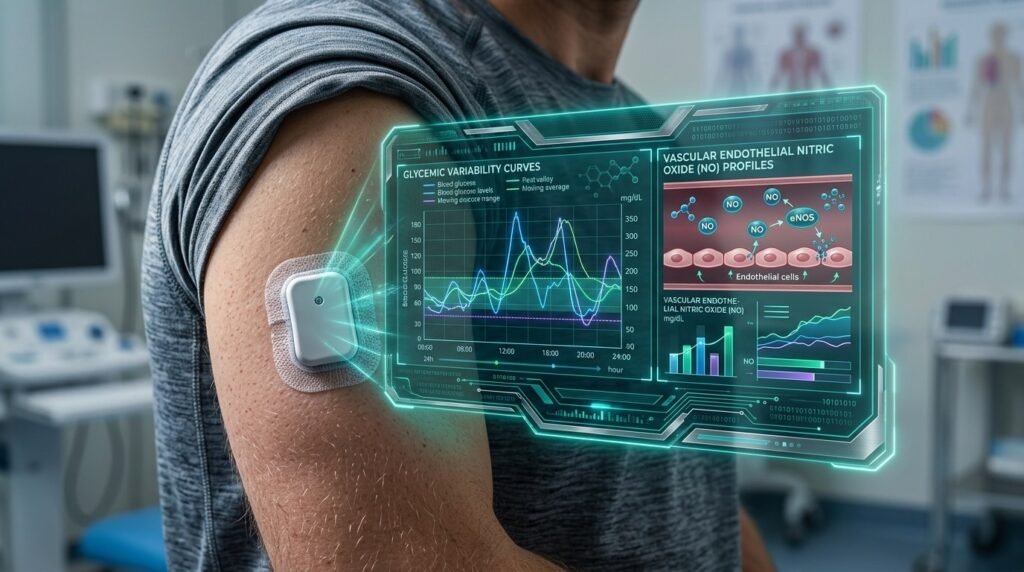
Furthermore, magnesium deficiency strongly exacerbates vascular hyper-reactivity, accentuating the detrimental cardiovascular micro-injuries documented in our continuous telemetry reports on postprandial glycemic variability micro-spikes.
Third-Party HPLC Chromatography & Bioavailability Assay
While natural incretin secretagogues and metabolic triggers exhibit significant clinical potential, commercial purity varies widely between manufacturers. Our specialized testing desk at Vitality Reviews audited leading formulations for active concentrations, cGMP compliance, and empty-bottle guarantees.
Examine the Complete Clinical Laboratory Review on Filho →🌐 Related Medical Investigations Across Our Publishing Network
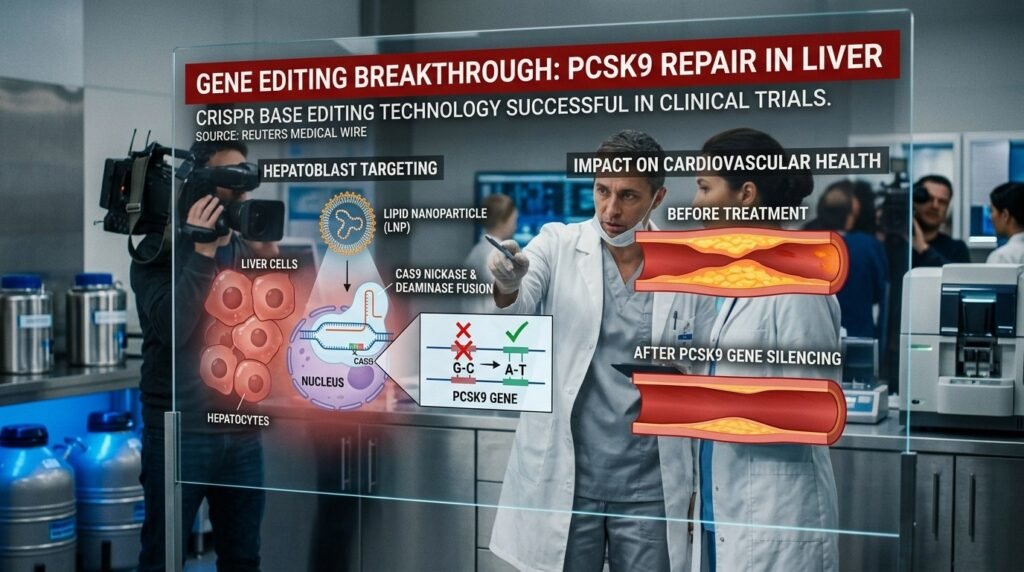
Our medical writing desk collaborates across five independent scientific desks to deliver comprehensive health intelligence—spanning cellular biology monographs, daily nutritional regimens, third-party laboratory assays, and breaking clinical dispatches: