Why Alcohol Mouthwashes Destroy Oral Health: The Nitrate-Nitric Oxide Disruption & The Sublingual Probiotic Protocol
October 2026 Clinical Brief
The Hidden Danger of ‘Sterilizing’ Your Mouth Every Morning
For over fifty years, commercial advertising taught millions that healthy oral hygiene requires a burning, antiseptic mouthwash that kills 99.9% of bacteria. Today, cardiovascular physiologists and orthomolecular researchers warn that this daily ritual actively dismantles one of your body’s primary blood pressure regulating mechanisms: the enterosalivary nitrate-nitric oxide pathway.
1. The Enterosalivary Nitrate-to-Nitric Oxide Pathway
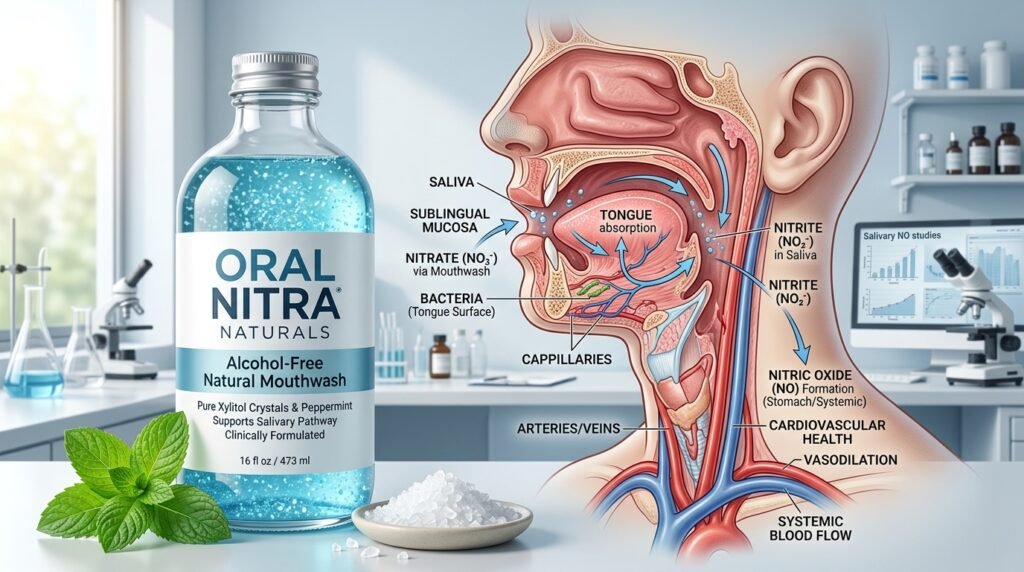
When you consume dietary nitrates from leafy greens, beets, and vegetables, they are rapidly absorbed in the upper gastrointestinal tract and concentrated up to 10-fold in your salivary glands. As saliva enters your mouth, specialized commensal bacteria residing on the dorsal surface of your tongue (such as Veillonella and Actinomyces) express an essential enzyme: nitrate reductase.
These beneficial bacteria reduce inorganic nitrate (NO3-) into bioactive nitrite (NO2-). When swallowed into the acidic gastric environment of the stomach, nitrite is converted into Nitric Oxide (NO), the master vasodilator responsible for relaxing vascular smooth muscle, reducing arterial stiffness, and regulating systemic blood pressure.
2. What Happens When You Use Antiseptic Mouthwashes?
When you rinse with conventional chlorhexidine or alcohol-based mouthwashes, you wipe out beneficial nitrate-reducing bacteria along with harmful microbes. Clinical human trials demonstrate startling acute effects:
Clinical Consequences Documented in Human Trials:
- Acute Blood Pressure Spike: Rinsing twice daily with antiseptic mouthwash abolishes oral nitrite production by up to 90%, causing an immediate 4 to 8 mmHg spike in systolic blood pressure within 24 hours.
- Salivary Gland Dehydration: Alcohol erodes the protective mucin layer of the mouth, causing xerostomia (dry mouth) and creating an ideal breeding ground for acid-producing anaerobic pathogens.
- Rebound Halitosis: Because antiseptic rinses kill indiscriminately, opportunistic sulfur-producing bacteria rebound rapidly within hours, worsening chronic bad breath.
3. The Orthomolecular Replacement Protocol
Rather than sterilizing your oral cavity, orthomolecular medicine emphasizes cultivating an alkaline, balanced microbial terrain:
| Target Compound | Clinical Dosage | Timing & Administration | Primary Biological Mechanism |
|---|---|---|---|
| Pure Birch Xylitol | 3 – 5 grams | Post-meals (lozenges/rinse) | Starves cavity-causing S. mutans; raises salivary pH |
| Sublingual Probiotic Strains | 3.5 Billion CFU | Chewed slowly at bedtime | Repopulates gums with L. paracasei & B.lactis BL-04 |
| Coenzyme Q10 (Ubiquinol) | 100 mg | With morning breakfast | Fuels cellular mitochondrial repair in gingival tissue |
| Vitamin K2 (MK-7) | 100 mcg | With dietary fat | Guides ionic calcium into tooth enamel hydroxyapatite |
For more details on the vascular cardiology research linking oral bacteria to arterial plaque formation, consult The Oral-Systemic Vascular Axis Monograph on Vitality News Report.
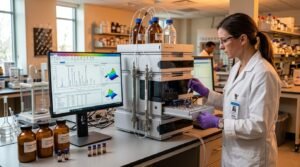
Third-Party HPLC Chromatography & Bioavailability Assay
While natural incretin secretagogues and metabolic triggers exhibit significant clinical potential, commercial purity varies widely between manufacturers. Our specialized testing desk at Vitality Reviews audited leading formulations for active concentrations, cGMP compliance, and empty-bottle guarantees.
Examine the Complete Clinical Laboratory Review on Filho →To inspect independent HPLC laboratory testing and safety audits on chewable dental probiotic formulas containing 3.5 billion CFU, review the ProDentim Forensic Lab Assay on Vitality Reviews.
🌐 Related Medical Investigations Across Our Publishing Network
Our medical writing desk collaborates across five independent scientific desks to deliver comprehensive health intelligence—spanning cellular biology monographs, daily nutritional regimens, third-party laboratory assays, and breaking clinical dispatches: