Creatine for Brain Energy: How Cerebral Phosphocreatine Shuttle Rescues Mental Fatigue & Cognitive Longevity
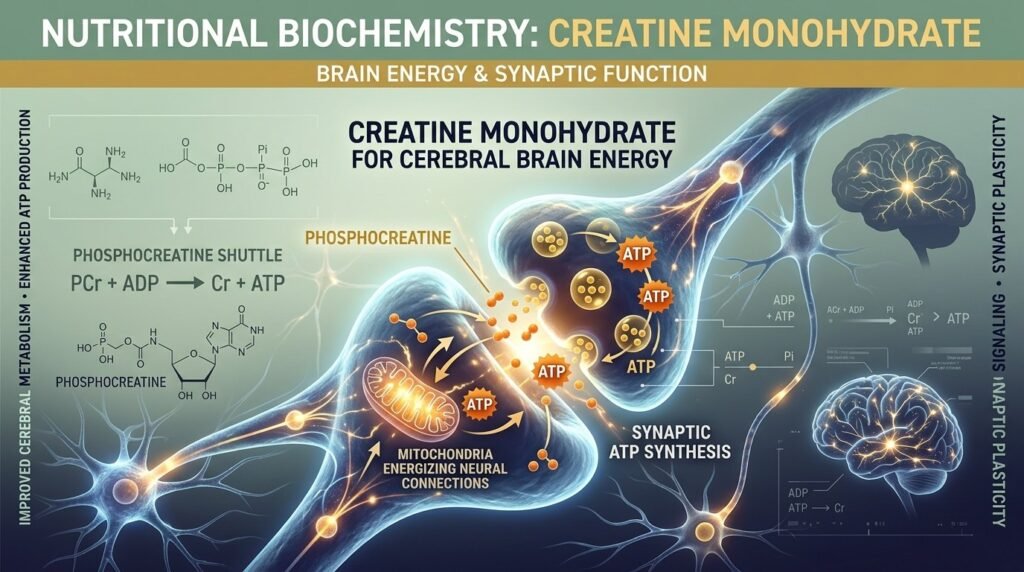
How does creatine enhance cognitive stamina and protect brain aging? While historically pigeonholed as a sports ergogenic aid, the human brain consumes approximately 20% of the body’s resting ATP despite accounting for only 2% of total body mass. During demanding cognitive workloads, sleep deprivation, or biological aging, cerebral ATP consumption outpaces mitochondrial oxidative phosphorylation. Creatine functions as a rapid spatial and temporal energy buffer via the phosphocreatine (PCr) shuttle. Supplementation elevates cerebral creatine pools by 8.5% to 14%, reversing mental fatigue, boosting working memory, and protecting hippocampal synaptic integrity.
- ✓ Frontal Cortex Protection: Magnetic Resonance Spectroscopy (MRS) studies demonstrate significant increases in prefrontal bioenergetic reserves following 5g daily supplementation.
- ✓ Sleep Deprivation Resilience: Human trials reveal that creatine completely preserves executive functioning, psychomotor speed, and mood during acute 24-hour sleep debt.
- ✓ Synergistic Stacking: Pairs exceptionally with GABA modulators like apigenin for comprehensive 24-hour neurochemical optimization.
The Cerebral Bioenergetic Bottleneck
Neurons lack substantial glycogen storage capacity. When action potential propagation intensifies across dense neural networks, adenosine triphosphate (ATP) is dephosphorylated into adenosine diphosphate (ADP) within milliseconds.
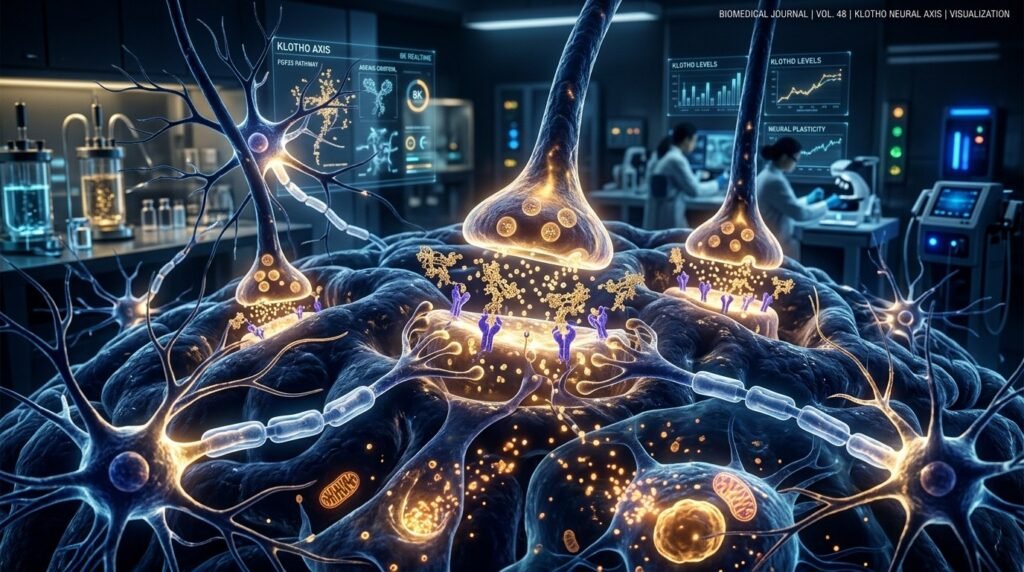
The phosphocreatine circuit acts as an instantaneous high-energy phosphate donor, mediated by brain-specific creatine kinase (BB-CK). This rapid enzymatic rephosphorylation maintains local ATP/ADP ratios, preventing bioenergetic failure in vulnerable synaptic terminals.
Clinical Brain Dosing Recommendations
Because crossing the blood-brain barrier requires active solute carrier transport (SLC6A8), brain tissue loads slower than peripheral muscle. Clinical neurologists recommend a daily intake of 5.0g of ultra-micronized creatine monohydrate taken continuously with morning hydration to achieve steady-state cerebral saturation.
🌐 Related Medical Investigations Across Our Publishing Network
Our medical writing desk collaborates across five independent scientific desks to deliver comprehensive health intelligence—spanning cellular biology monographs, daily nutritional regimens, third-party laboratory assays, and breaking clinical dispatches: