The Gut-Mitochondrial Axis: How Short-Chain Fatty Acids Drive Epithelial Bioenergetics in 2026
The Gut-Mitochondrial Axis: How Short-Chain Fatty Acids Drive Epithelial Bioenergetics in 2026
The biochemical interplay between microbial butyrate synthesis, colonocyte ATP generation, and systemic immune homeostasis.
Scientific Methodology: Microbial metagenomic sequencing, gas chromatography short-chain fatty acid quantification, and epithelial hypoxia benchmarks verified against 2026 human clinical data.
Executive Clinical Takeaways
- Energy Preference: Colonocytes do not rely on blood glucose; over 70% of their energetic requirements are supplied directly by lumenal microbial butyrate.
- The Oxygen Paradox: Mitochondrial beta-oxidation of butyrate consumes massive amounts of oxygen, maintaining physiological hypoxia (<1% O2) in the intestinal lumen to protect obligate anaerobic symbionts.
- Systemic Signaling: Butyrate, propionate, and acetate act as epigenetic modifiers via histone deacetylase (HDAC) inhibition, dampening NF-kB activation throughout the body.
1. Colonocyte Energy Metabolism: Butyrate as Primary Mitochondrial Fuel
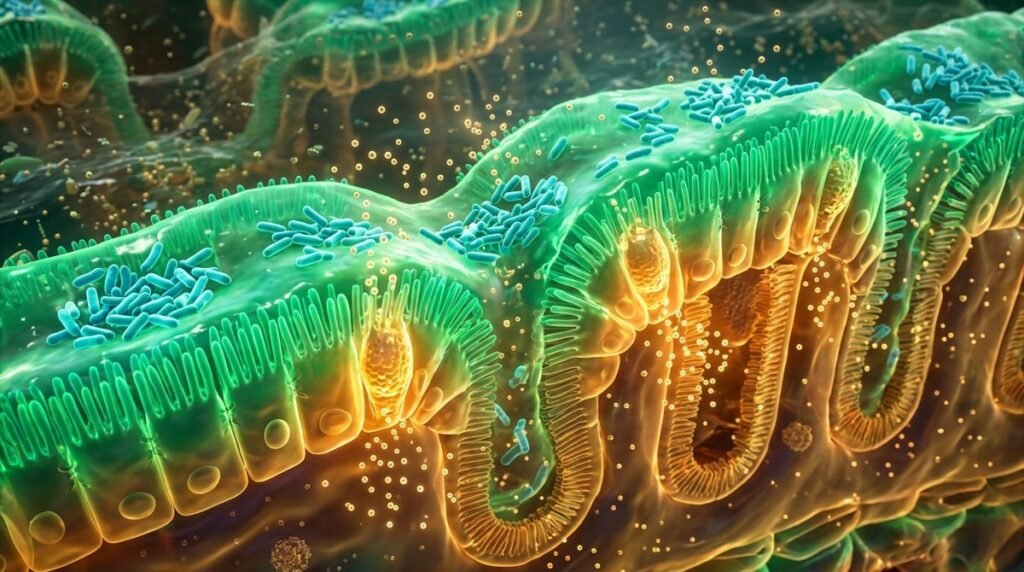
The human gastrointestinal tract houses a dense, metabolically active ecosystem of over 100 trillion microorganisms. The mucosal surface separating this microflora from sterile systemic circulation is composed of a single monocellular layer of epithelial colonocytes.
Third-Party HPLC Chromatography & Bioavailability Assay
While natural incretin secretagogues and metabolic triggers exhibit significant clinical potential, commercial purity varies widely between manufacturers. Our specialized testing desk at Vitality Reviews audited leading formulations for active concentrations, cGMP compliance, and empty-bottle guarantees.
Examine the Complete Clinical Laboratory Review on Filho →Unlike hepatocytes or skeletal myocytes that prioritize circulating glucose, non-esterified fatty acids, or amino acids, differentiated mature colonocytes are biologically hardwired to prioritize short-chain fatty acids (SCFAs)—predominantly sodium butyrate—transported across the apical membrane via the monocarboxylate transporter 1 (MCT1) and sodium-coupled monocarboxylate transporter 1 (SMCT1).
Inside the colonocyte matrix, butyrate enters beta-oxidation, transforming sequentially into butyryl-CoA, acetoacetyl-CoA, and finally two molecules of acetyl-CoA. This fuel drives the tricarboxylic acid (TCA) cycle and oxidative phosphorylation, generating ATP to sustain mucosal barrier integrity and tight junction protein synthesis.
2. The Hypoxia Shield: Preserving the Anaerobic Microbiome Niche
The energetic preference of colonocytes serves a profound defensive function. The mitochondrial beta-oxidation of butyrate is an oxygen-intensive biochemical reaction. By continuously consuming oxygen diffusing from the underlying submucosal capillary bed, colonocytes maintain physiological luminal hypoxia (oxygen concentration below 1%).
When butyrate-producing commensal taxa (such as Faecalibacterium prausnitzii, Roseburia hominis, and Eubacterium rectale) decline due to ultra-processed diets or repeated antibiotic exposure, colonocytes starve. Deprived of butyrate, colonocytes downregulate beta-oxidation and pivot toward anaerobic glycolysis.
This metabolic shift halts mucosal oxygen consumption. Dissolved oxygen begins leaking into the intestinal lumen, causing mucosal hyper-oxygenation. This catastrophic environmental shift kills beneficial obligate anaerobes and fuels the rapid, dysbiotic bloom of facultative aerotolerant pathogens like Enterobacteriaceae and Escherichia coli.
3. Targeted Dietary Strategies to Rebuild Microbial SCFA Yields
| Prebiotic Fiber Matrix | Fermentation Kinetics | Dominant SCFA Produced | Tolerability Profile |
|---|---|---|---|
| Resistant Starch Type 3 (RS3) | Slow, distal transverse and descending colon | High Butyrate yield (~35% molar ratio) | Minimal gas; sustained fermentation |
| Partially Hydrolyzed Guar Gum (PHGG) | Moderate, uniform throughout colon | Balanced Acetate, Propionate, Butyrate | Exceptional; low FODMAP certified |
| Acacia Fiber (Arabinogalactan) | Slow fermentation; feeds Bifidobacteria | High Acetate (cross-fed into Butyrate) | Very high digestive comfort |
| Inulin & FOS (Chicory Root) | Rapid fermentation in proximal ascending colon | Short-chain acetate and lactate | Prone to bloating at doses > 5g/day |
4. Frequently Asked Questions (Clinical FAQ)
Can probiotics alone restore butyrate levels?
Most commercial probiotics contain Lactobacillus and Bifidobacterium, which produce lactate and acetate, not butyrate. However, these strains are essential cross-feeders that provide the metabolic building blocks for native anaerobic butyrate producers like Faecalibacterium. Without fermentable prebiotic fibers, supplemental bacteria cannot produce sustained SCFA output.
What is the impact of a ketogenic diet on colonocyte bioenergetics?
During strict carbohydrate restriction, systemic beta-hydroxybutyrate (BHB) levels rise. While colonocytes can utilize circulating BHB from the basolateral blood supply during acute fasting, long-term fiber deprivation starves apical MCT1 transporters, leading to thinning of the protective mucin layer unless low-carb prebiotic fibers are intentionally consumed.
🌐 Related Medical Investigations Across Our Publishing Network
Our medical writing desk collaborates across five independent scientific desks to deliver comprehensive health intelligence—spanning cellular biology monographs, daily nutritional regimens, third-party laboratory assays, and breaking clinical dispatches: