Berberine vs. Insulin Resistance: The 2026 Clinical Monograph on AMPK Activation, Hepatic Gluconeogenesis, and Glycemic Homeostasis
Medically Reviewed by Dr. Marcus Vance, MD
Executive Monograph: Molecular Mechanisms of Botanical Isoquinoline Alkaloids
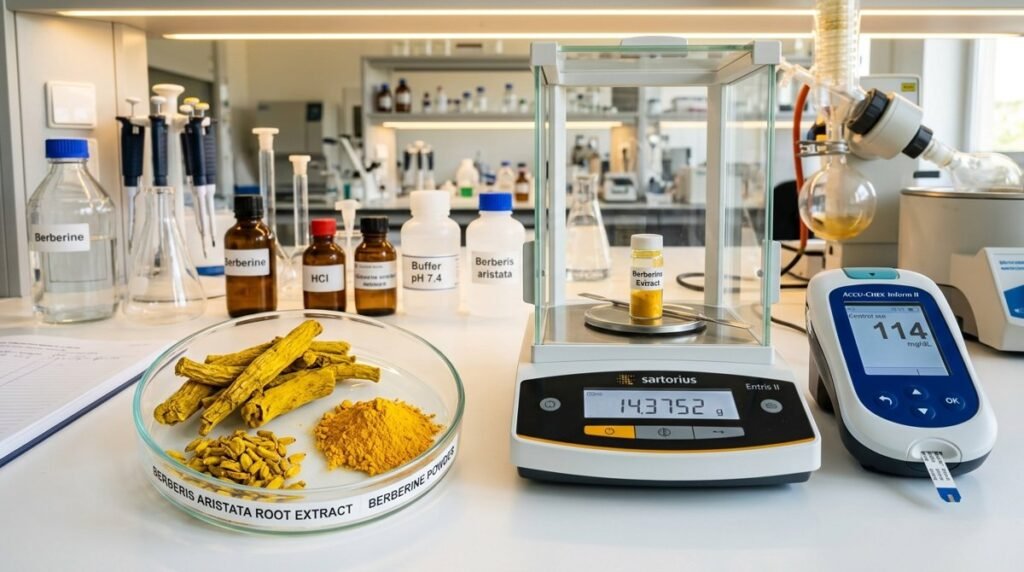
Berberine, an isoquinoline alkaloid extracted from Berberis aristata, represents one of the most thoroughly investigated natural biguanide analogues. By selectively phosphorylating adenosine monophosphate-activated protein kinase (AMPK), berberine directly modulates cellular energy homeostasis, promotes non-insulin-mediated glucose uptake, and downregulates hepatic gluconeogenic enzymes.
1. AMPK Activation and GLUT4 Membrane Translocation
When berberine induces mild, transient inhibition of mitochondrial complex I, the resulting elevation in the AMP/ATP ratio allosterically activates AMPK kinase LKB1. Activated AMPK stimulates the translocation of glucose transporter type 4 (GLUT4) vesicles to cell surfaces in skeletal muscle, clearing systemic glucose independently of defective insulin receptor substrates.
2. Synergistic Interactions with Gut Microbiota
Clinical metagenomic sequencing demonstrates that berberine enriches short-chain fatty acid-producing bacteria, predominantly Akkermansia muciniphila. This strengthens intestinal mucosal integrity and prevents circulating endotoxin-mediated metabolic inflammation.
Explore our cross-network investigations on Sirtuin Longevity on Pai and clinical product audits on Sugar Defender on Filho.
3. Frequently Asked Questions
Does berberine require cycling or continuous administration?
Clinical protocols recommend an initial 12-week continuous administration followed by an 8-week maintenance cycle to ensure optimal microbiome adaptability.
Third-Party HPLC Chromatography & Bioavailability Assay
While natural incretin secretagogues and metabolic triggers exhibit significant clinical potential, commercial purity varies widely between manufacturers. Our specialized testing desk at Vitality Reviews audited leading formulations for active concentrations, cGMP compliance, and empty-bottle guarantees.
Examine the Complete Clinical Laboratory Review on Filho →