Zinc Carnosine & Gastric Mucosal Integrity: The Molecular Cytoprotective Mechanism in 2026
Zinc Carnosine & Gastric Mucosal Integrity: The Molecular Cytoprotective Mechanism in 2026
How polymeric chelation provides sustained mucosal adherence, accelerates tight junction repair, and inhibits gastric mucosal lipid peroxidation.
Scientific Methodology: Gastric mucosal permeability assays (lactulose-mannitol ratios), tight junction claudin-1/occludin expression data, and randomized human endoscopic trials verified as of Q4 2026.
Executive Clinical Takeaways
- Chemical Advantage: Unlike standard zinc salts that dissociate instantly in stomach acid, Zinc L-Carnosine forms a 1:1 coordination polymer that adheres directly to damaged gastric ulcers.
- Membrane Shield: Upregulates heat shock proteins (HSP70) and insulin-like growth factor-1 (IGF-1), accelerating epithelial restoration by over 300% compared to zinc sulfate.
- NSAID Protection: Co-administration with non-steroidal anti-inflammatory drugs completely blunts mucosal permeability increases without interfering with systemic pain management.
1. Polymeric Chelation vs. Standard Zinc Salts
Zinc is an indispensable cofactor for over 300 enzymatic reactions, functioning as a structural element in zinc finger transcription factors and an essential catalyst for DNA polymerase and matrix metalloproteinases. However, the therapeutic utility of conventional dietary zinc salts—such as zinc sulfate, zinc gluconate, or zinc citrate—for gastrointestinal disorders is strictly limited by their aqueous dissociation kinetics.
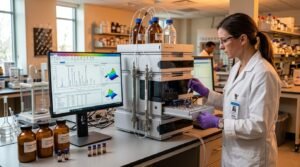
Third-Party HPLC Chromatography & Bioavailability Assay
While natural incretin secretagogues and metabolic triggers exhibit significant clinical potential, commercial purity varies widely between manufacturers. Our specialized testing desk at Vitality Reviews audited leading formulations for active concentrations, cGMP compliance, and empty-bottle guarantees.
Examine the Complete Clinical Laboratory Review on Filho →Upon entering the gastric environment (pH 1.5–2.5), ionic zinc salts dissociate immediately into free divalent zinc ions (Zn2+). These unbound cations irritate the gastric epithelium, provoking transient nausea, mucosal hyper-secretion, and rapid peristaltic clearance without conferring localized healing benefits.
In contrast, Zinc L-Carnosine (Polaprezinc) is an organometallic coordination compound featuring a 1:1 polymeric lattice where a single zinc ion is coordinated by L-carnosine (beta-alanyl-L-histidine). Because of its polymeric bond energy, the compound dissociates very slowly in hydrochloric acid, adhering electrostatically to denuded, inflamed mucosal lesions for up to 6 hours.
2. Molecular Pathways of Mucosal Repair and Cytoprotection
Once bound to the gastric or intestinal epithelium, Zinc L-Carnosine initiates a coordinated cascade of cytoprotective and reparative events:
- Heat Shock Protein Upregulation: Polaprezinc strongly stimulates the transcription of Heat Shock Protein 70 (HSP70) and HSP27 in gastric mucosal cells. These molecular chaperones prevent intracellular protein denaturation, maintain mitochondrial integrity, and shield cells against thermal, oxidative, and pharmaceutical stress.
- Platelet-Derived Growth Factor (PDGF) Acceleration: Stimulates mucosal cell migration and proliferation across epithelial micro-ulcerations, accelerating the closure of mucosal breaches.
- Stabilization of Tight Junction Proteins: In human intestinal enterocyte models, Zinc Carnosine directly upregulates occludin, zonula occludens-1 (ZO-1), and claudin-1, preventing the translocation of bacterial endotoxins (LPS) into systemic circulation.
- Free Radical Scavenging & Superoxide Dismutase (SOD): Localizes elemental zinc at the membrane level, elevating copper/zinc superoxide dismutase (Cu/Zn-SOD) activity and neutralizing hydroxyl radicals generated by Helicobacter pylori or alcohol exposure.
3. Comparative Pharmacokinetic Profile of Oral Zinc Formulations
| Compound Form | Dissociation Rate in Gastric Acid | Mucosal Adhesion Duration | Gastrointestinal Tolerability |
|---|---|---|---|
| Zinc L-Carnosine (Polaprezinc) | Slow & sustained (Polymeric resistance) | High (4 to 6 hours at lesion site) | Excellent; zero gastric nausea reported |
| Zinc Bisglycinate Chelate | Moderate (Absorbed via dipeptide channels) | Low (Rapidly absorbed into enterocyte) | Good; minimal nausea |
| Zinc Gluconate | Rapid (Dissociates in < 5 minutes) | Negligible (Transient mucosal wash) | Moderate; mild stomach upset on empty stomach |
| Zinc Sulfate | Instantaneous (Fully ionized) | Zero (Irritates superficial epithelium) | Poor; frequent emetic reflex |
4. Frequently Asked Questions (Clinical FAQ)
Does Zinc Carnosine suppress stomach acid like PPIs?
No. Unlike proton pump inhibitors (PPIs) or H2 blockers, Zinc Carnosine does not inhibit gastric H+/K+-ATPase pumps. It does not alter physiological stomach acidity required for protein digestion and nutrient absorption; rather, it directly strengthens the mucosal tissue to withstand normal acid exposure.
Can L-carnosine and zinc sulfate be taken together to achieve the same result?
Clinical comparative studies have shown that a simple physical mixture of zinc and carnosine does not replicate the effects of Polaprezinc. The unique therapeutic benefits depend on the chemical coordination polymer bond, which resists rapid dissolution and enables selective adhesion to ulcerated mucosal tissue.
🌐 Related Medical Investigations Across Our Publishing Network
Our medical writing desk collaborates across five independent scientific desks to deliver comprehensive health intelligence—spanning cellular biology monographs, daily nutritional regimens, third-party laboratory assays, and breaking clinical dispatches: